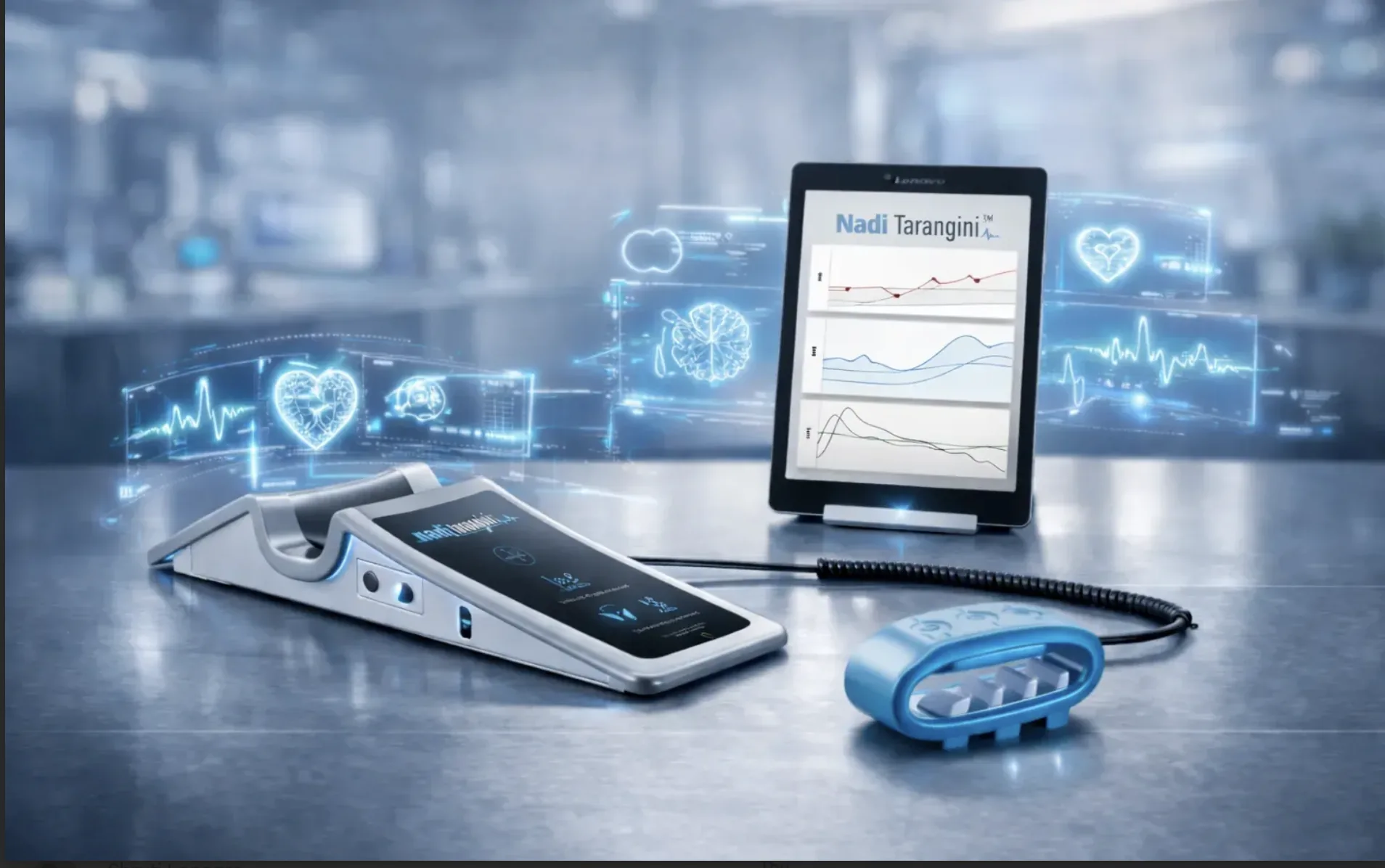
Every Atreya product runs on the same patented, CDSCO-approved pulse-diagnostic engine, using high-precision sensing, machine learning and 5.5 lakh+ validated readings, packaged differently depending on who's using it.
Nadi Tarangini is our patented, CDSCO-approved AI pulse-diagnostic device, built for Ayurvedic practitioners and clinics. In under a minute it captures a patient's pulse and returns 22 quantified Ayurvedic parameters, including Tridosha balance, Agni, stress, digestion and more, as a report the practitioner can act on immediately. It's installed in 2,500+ centres and has processed over 5 lakh patient readings.
Nadi Pariksha
AI-powered Ayurveda, delivered to your door. A trained technician brings the Nadi Tarangini device to you: no blood draw, no fasting, no lab visit, results the same day.
8 parameters: pulse remark, digestion, immunity, hydration, toxin load, stress, overthinking and flexibility.
3 parameters: body system indicators, plus which organs are strong and which are currently at risk.
5 parameters: Prakruti (natural state), Vikruti (current state), dynamics, preferences and mental tendencies.
7 parameters: food intake, food restrictions, exercise, yoga, herbs, supplements and therapies.
One validated engine, 85% accuracy, patented sensors: whether you're a clinic running Nadi Tarangini or a patient booking Nadi Pariksha at home, the data behind your report is the same.
A doctor listens to a pulse and reaches a diagnosis. Nadi Tarangini works the same way: it's learned from thousands of real pulse readings, so it recognizes the same patterns a trained practitioner would, just consistently and in under a minute.
High-precision sensors record signals at the Vata, Pitta & Kapha pulse points.
The engine reads the waveform and pulls out 22+ Ayurvedic health parameters from it.
Those parameters are turned into a report the practitioner can read and act on right away.
Some readings only have two possible answers, like whether blood pressure comes back high or normal. These are the fastest, most straightforward calls the engine makes.
Other readings, like identifying someone's Prakriti, have several possible answers: Vata, Pitta, Kapha, or a combination of the three. The engine weighs the pulse pattern against all of them before settling on one.
A video series walking through how the device works and what it detects.
Ayurvedic physicians use a holistic, multi-sensory approach. Each method contributes a different layer of insight, together forming a full picture of a patient's constitution and current imbalances.
Observation. Visual assessment of body frame, skin tone, eye clarity, tongue coating and posture to identify dominant dosha characteristics.
Pulse & Touch. Nadi Pariksha reveals Vata, Pitta and Kapha patterns; touch assesses skin texture, temperature, moisture and tissue quality.
Questioning & History. Detailed inquiry into diet, sleep, digestion, lifestyle, emotional tendencies and family history.
Biological age and gender influence Prakriti expression; Vata tends to increase with age.
Nadi rhythm, rate and variability are primary indicators; lean, medium or heavy build reflects dominant dosha.
Daily routine, activity levels and food preferences help refine the Vata, Pitta or Kapha classification.
Sleep depth and duration reflect nervous system balance; Agni (digestive strength) is a key Kapha/Pitta indicator.
The Nadi Tarangini sensor captures rich digital signals from the pulse. No single feature decides alone. The strength lies in how they interact, just as a physician combines pulse, symptoms and history to reach a diagnosis.
Beats per minute and regularity. An elevated rate may suggest Pitta dominance or a stress response.
Height and strength of each wave. Vata types often show low amplitude; Kapha types show high amplitude.
Vata shows irregular rhythm, Pitta a sharp frequency, Kapha slow and steady waves.
High variability points to Vata; low variability with high pressure points to Kapha imbalance.
Documented by Lt. Vaidyaraj Ashok Bhat (Pune), the traditional reading of a pulse spans several dimensions that Nadi Tarangini now captures digitally.
Depth, intensity, amplitude and force (time domain); speed, frequency and rhythm (frequency domain).
Length, shape, quantity and texture (Akruti); width and volume in three dimensions.
The serpentine waveform signature associated with Vata.
The frog-like waveform signature associated with Pitta.
The swan-like waveform signature associated with Kapha.
Ayurveda considers the whole person. Our diet and yoga planners generate custom recommendations based on each patient's health status, closing the loop from assessment to action.
Personalized dietary guidance generated from a patient's Prakriti and current imbalance profile.
Targeted asana and lifestyle recommendations aligned with the same pulse-derived insights.
Nadi Tarangini is not just a device. It's a practice platform built around the clinician.
Every patient record is handled through secure, ethical and compliant data management practices that protect the information behind every pulse reading.